🔥 Launch price $27(reg. $47)·Ends in --:--:--·63 of 200 spots left
For the mare who's been rubbing since June
Get her through September without a single new welt.
In 14 days. No fly sheet, no mask, no chemicals — because the flies
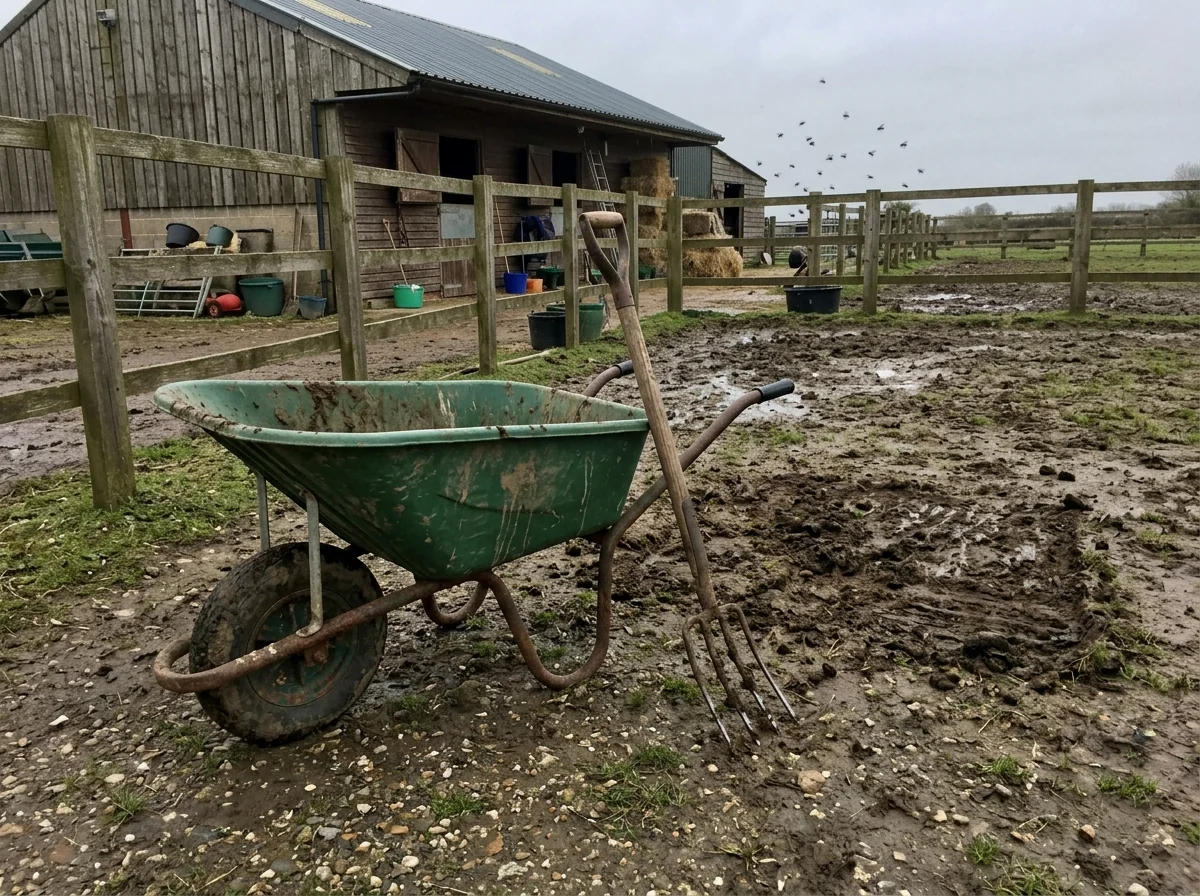
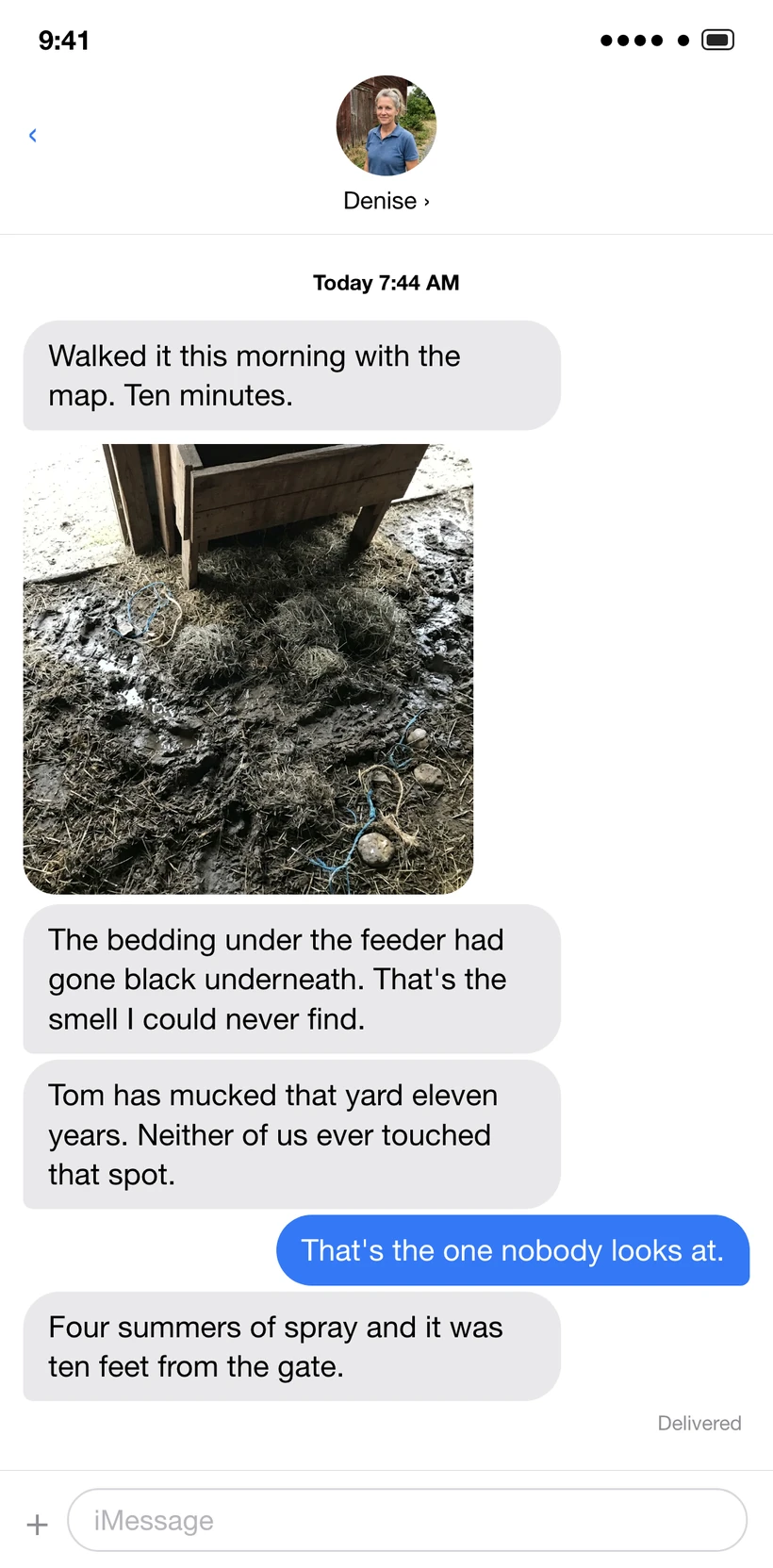
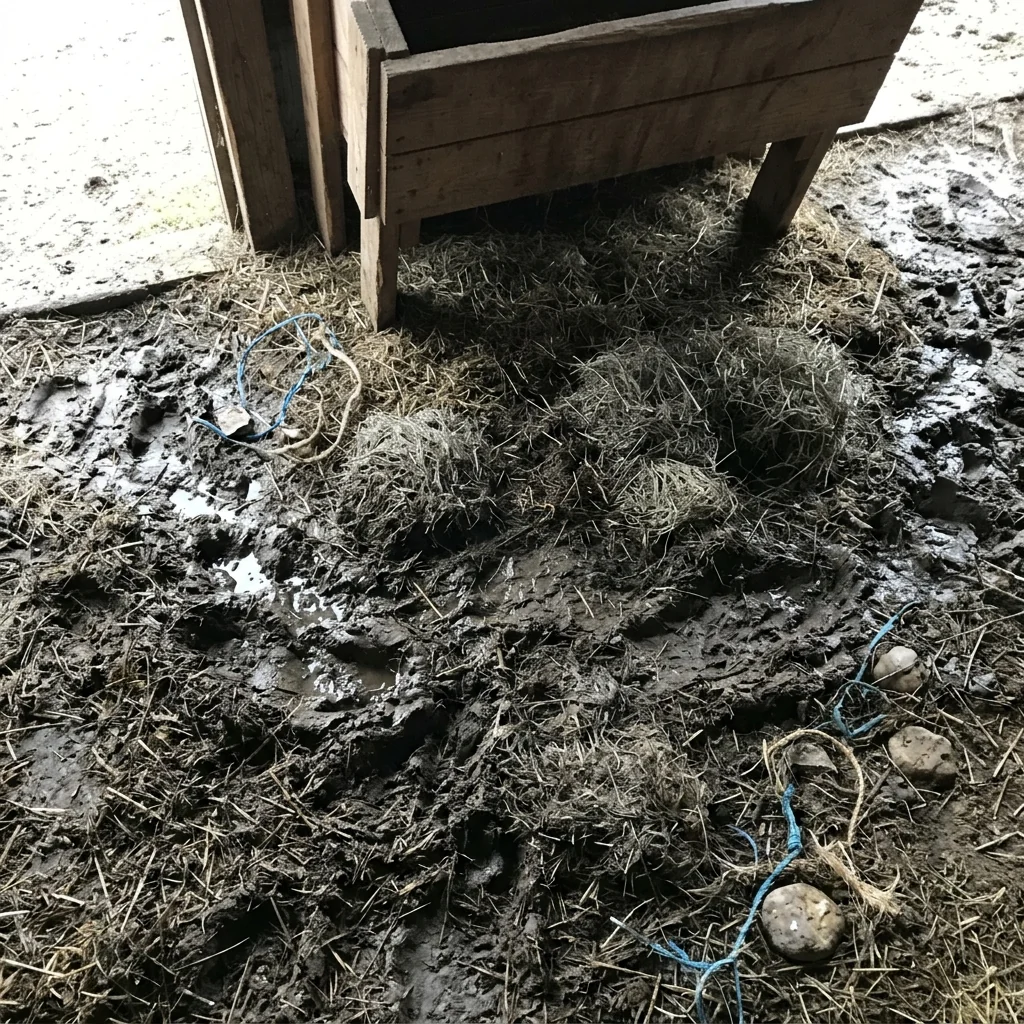
were never coming from the manure. They're coming from four wet spots you walk past
every morning.
Find all four in a ten-minute walk
Under $20 of supplies, mostly from the grocery store
Works on a boarded horse too
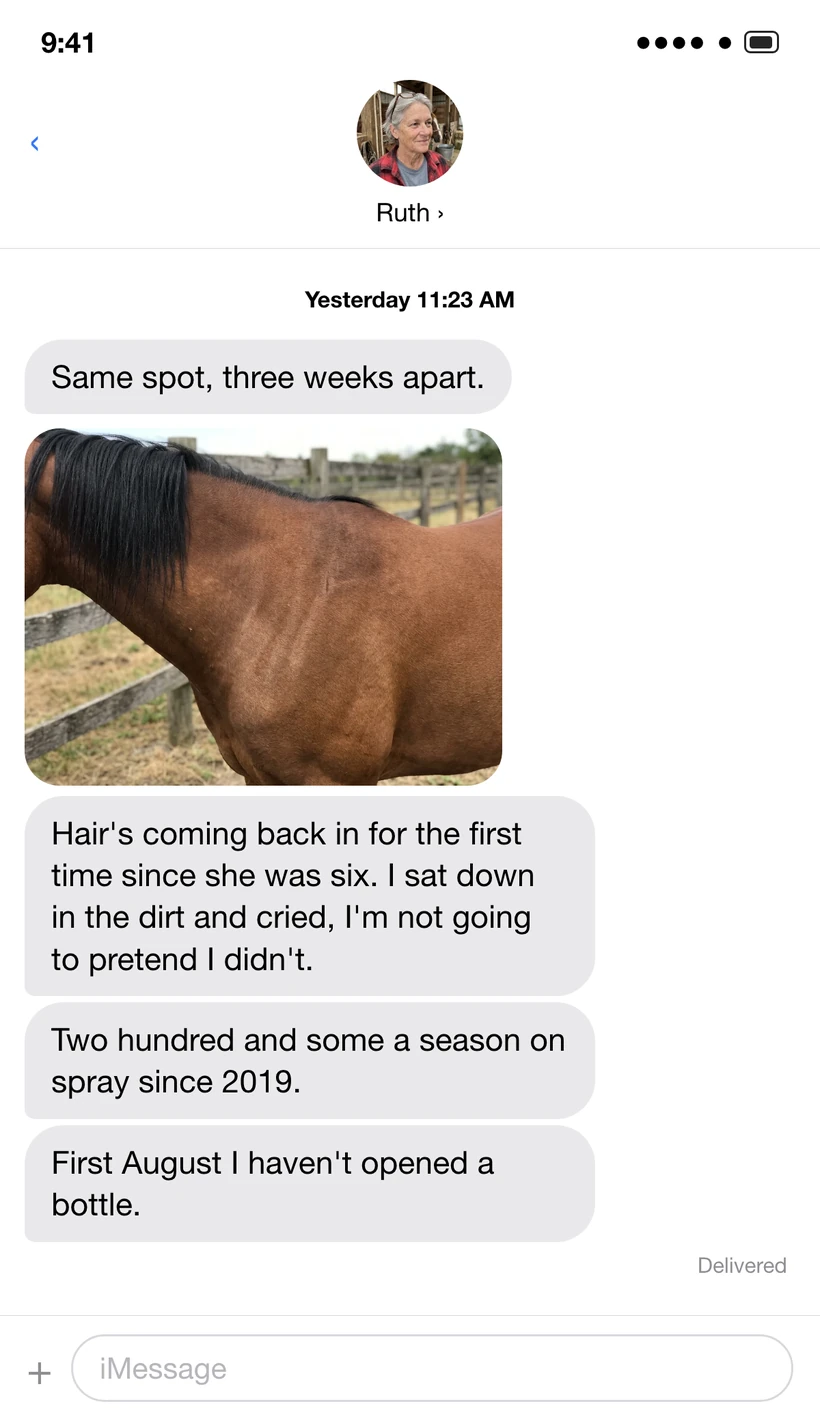
Day 21. Tail still, no sheet on her, nothing sprayed since Tuesday.
Why this, why now
Does this summer feel familiar?
You don't need anyone to describe her to you. You've been watching
her since June.
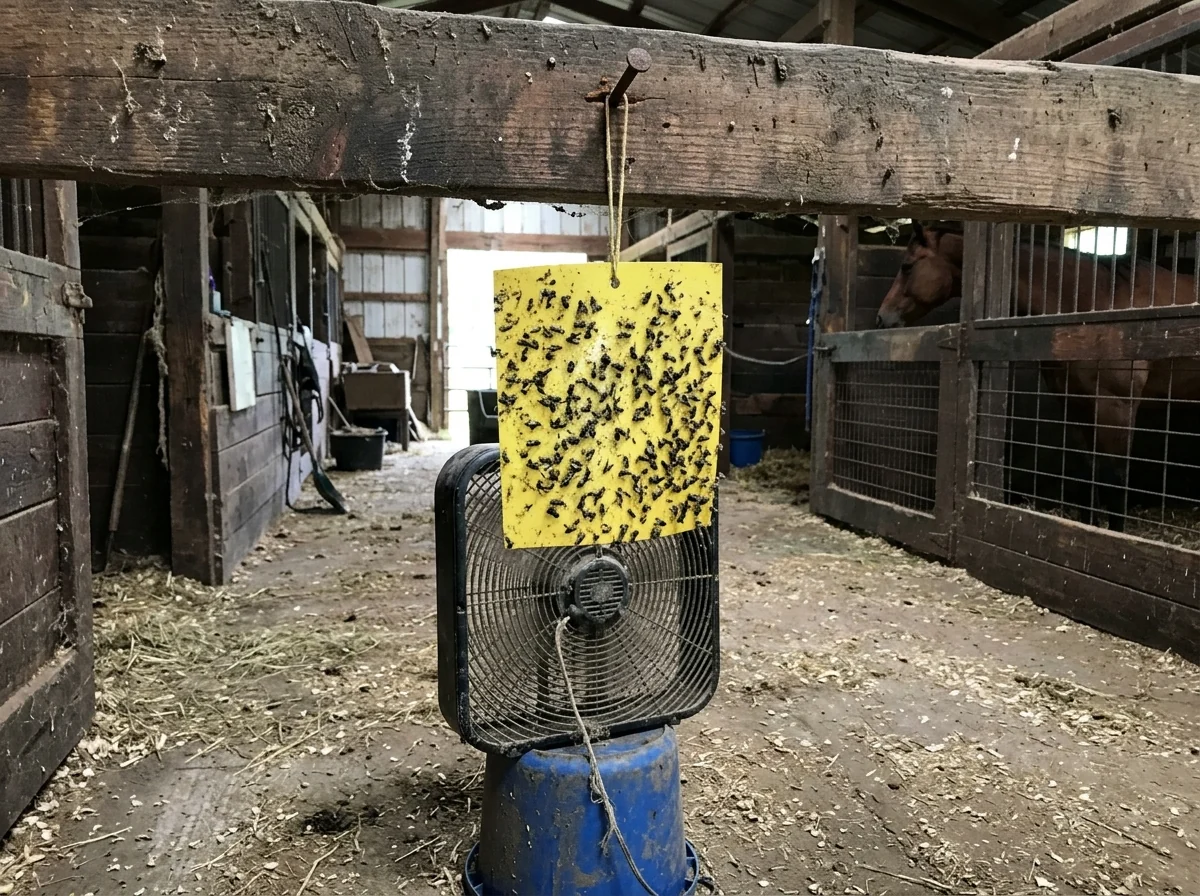
Dead by noon
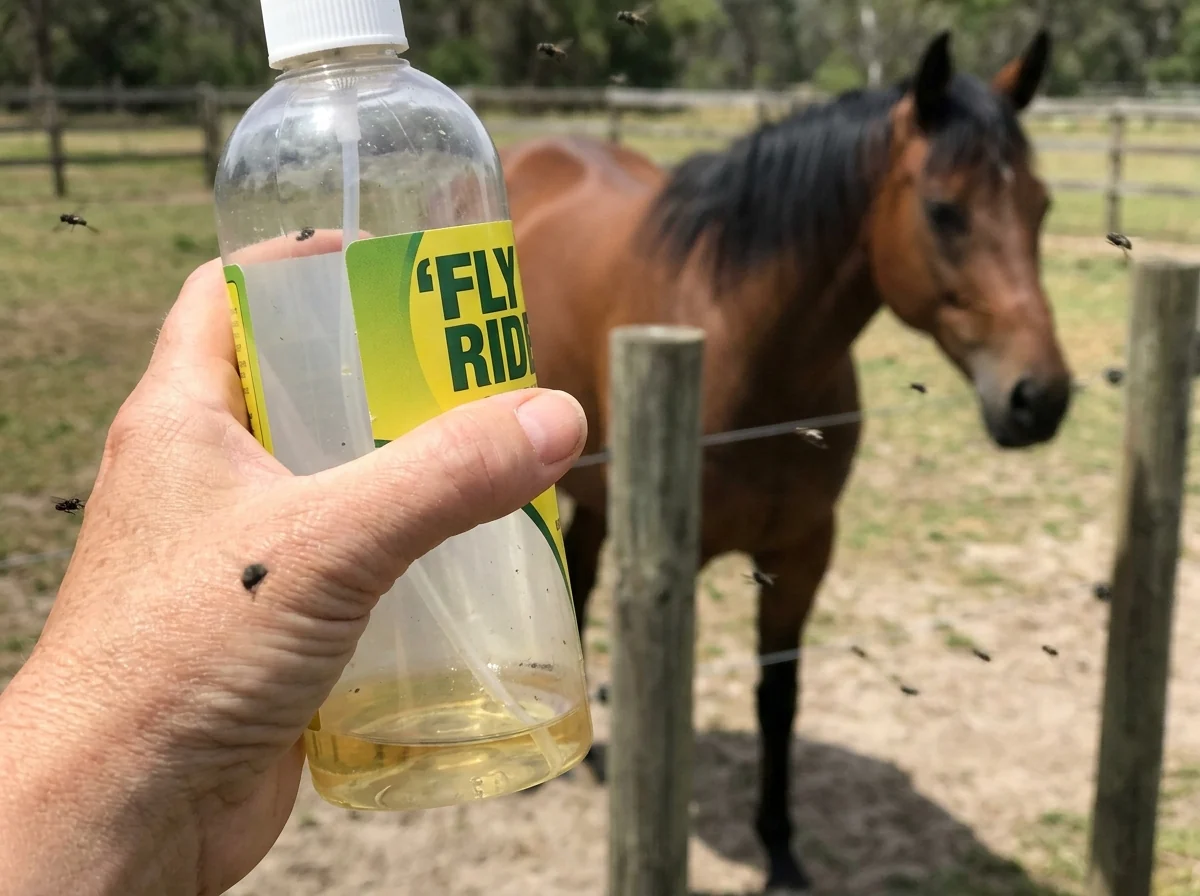
You spray at seven. By lunch they're back on her and you're reaching for the bottle again.
The mane keeps going
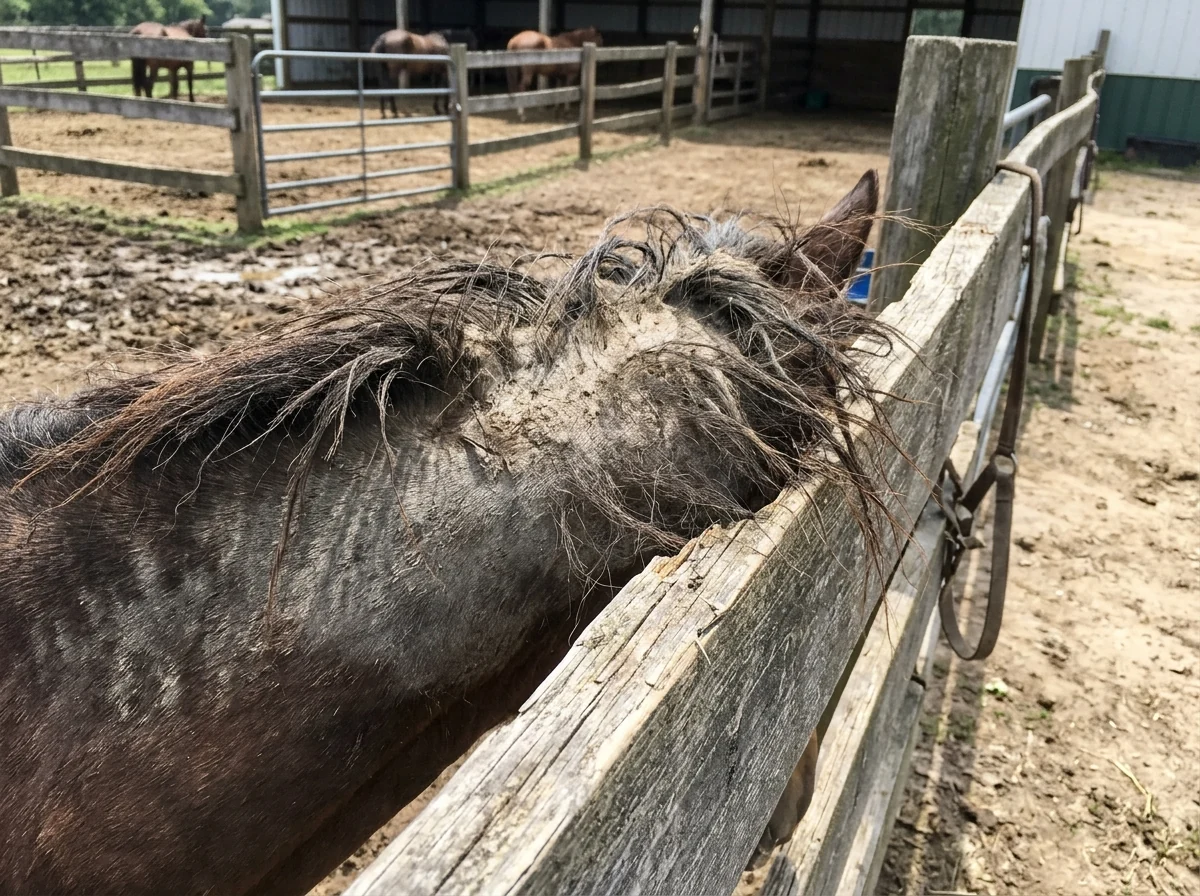
She rubs the fence rail raw, and every year it comes back thinner than the last.
A shelf of bottles
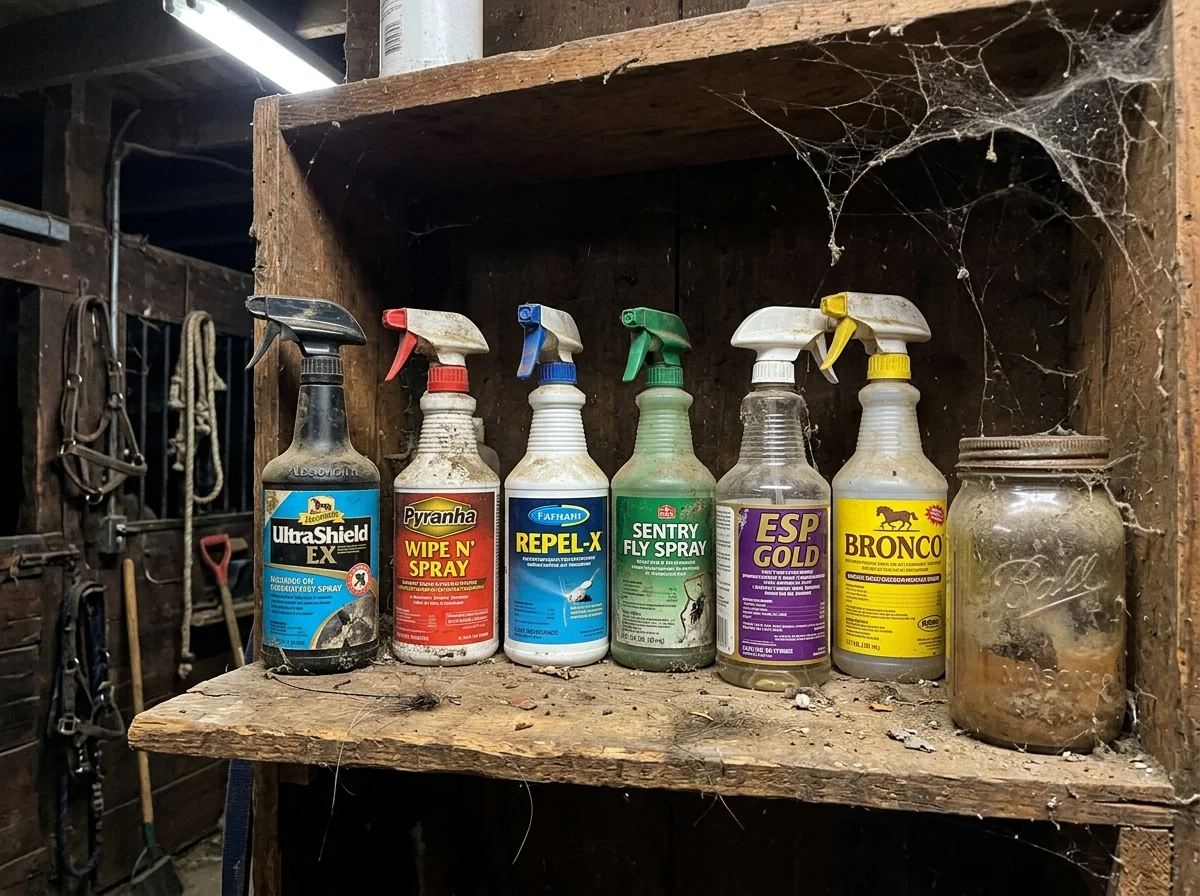
Six of them. Two hundred dollars a season, every season. Not one of them held.
A yard you pick daily
You muck it religiously. The flies never cared. Now you know why.
There's a reason none of it worked.
The problem
The spray isn't failing you. It's doing everything it can do.
A fly spray kills the fly that's on her right now. It does that well. What it
can't do is anything about the next one.
And there's always a next one, because the ones biting her today were laid three weeks
ago in material sitting thirty feet from where you're standing.
What the bottle does
1
fly, for about four hours, on the part of her you sprayed.
Then it evaporates and she's exactly where she started.
What's actually happening
80–100
eggs from one female, hatching on a 28-day loop, all season long.
That's why the shelf filled up and the mane never came back.
You're not losing because you picked the wrong spray. You're
losing on arithmetic — and nobody sells you the fix for arithmetic, because it
doesn't come in a bottle.
The solution
It was never the manure.
Stable flies don't breed in fresh manure. They never have. They need wet,
rotting plant matter — and there are exactly four places in your paddock where that sits.
You've been cleaning the wrong thing. Carefully. For years.
Four spots. Not one of them is the manure pile.
Dry them once and you don't kill the flies. You end the generation.
Eggs can't reach pupa without moisture. Take the water out of those four spots and the
whole batch dies where it lies — and the next batch has nowhere to be laid.
Egg to adult — 28 days
One female lays 80–100 eggs. Break the chain once and the whole generation is gone.
🥚
Egg
DAY 0
Laid in wet, rotting plant matter.
🐛
Larva
DAYS 1–12
Feeds in the damp. Needs moisture to survive.
🟤
Pupa
DAYS 13–20
Hardened off. By now you can't touch it.
🪰
Adult
DAY 28
On her neck — and laying again in two days.
DRY IT HERE
Take the water out anywhere in those first twelve days and the larvae never reach pupa.
You don't kill the flies. The batch never becomes flies.
28 days at 70°Fas few as 12 at 90°F
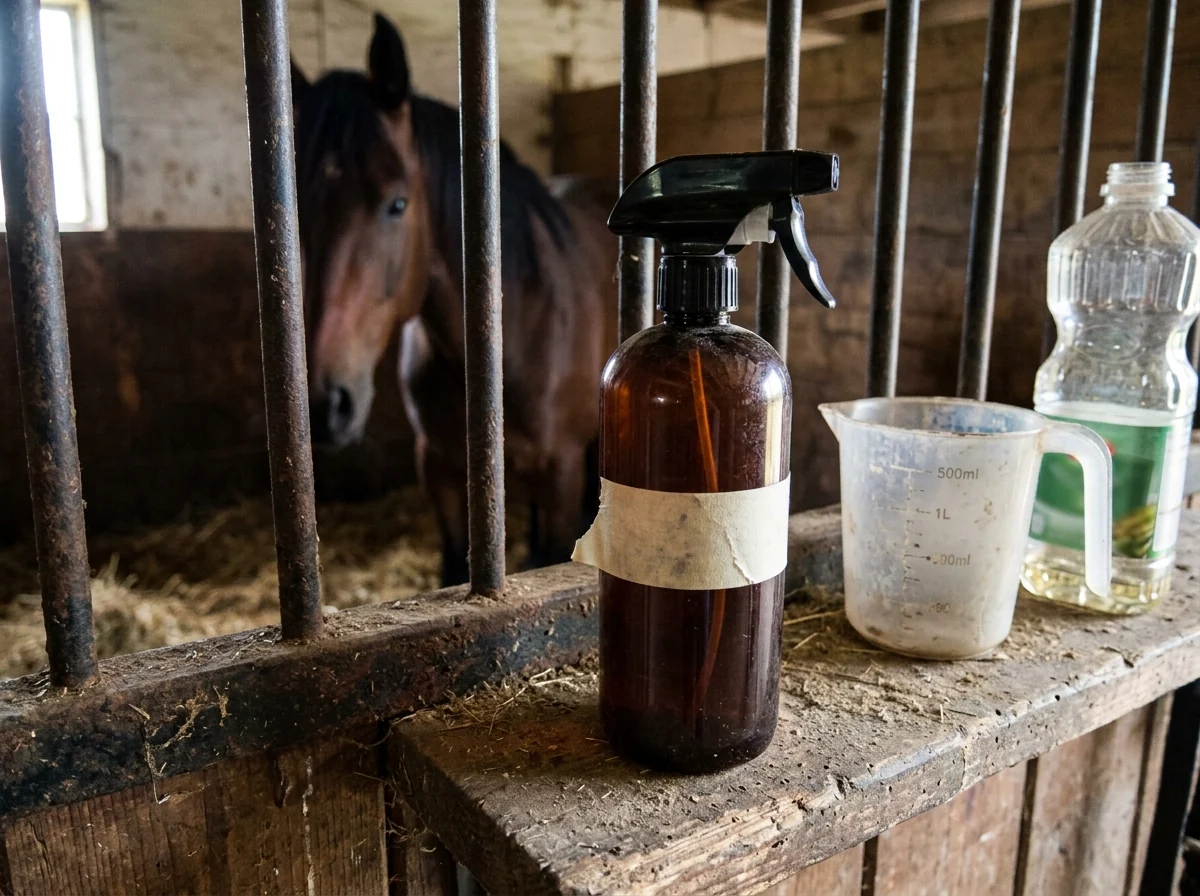
And for the fourteen days in between, the spray you mix yourself.
Every homemade recipe on the internet flashes off in twenty minutes, because nothing in
it holds the oils to her coat. Ours has the fixative, at the ratio the entomology literature
actually measured, mixed in the order that keeps it from separating.
A few dollars a gallon. And by week three you're not mixing it
as often, because there's less coming at her.
Four printed pieces and the recipe. $141 of value for $27.
★ The core
The Source Map
The four spots, drawn on a paddock that looks like yours, plus how to find yours in a
single ten-minute walk and exactly what to do with each one. Print it and put it on the
tack room wall.
Value $47
Included
The 14-Day Cover
Base formula plus three variants, the fixative ratio, the mixing order that stops it
separating, the 24-hour rest test, and the equine-safe oil table with dilutions, patch
test and the popular oils to keep away from horses. Shopping list with cost per gallon.
Value $29
Included
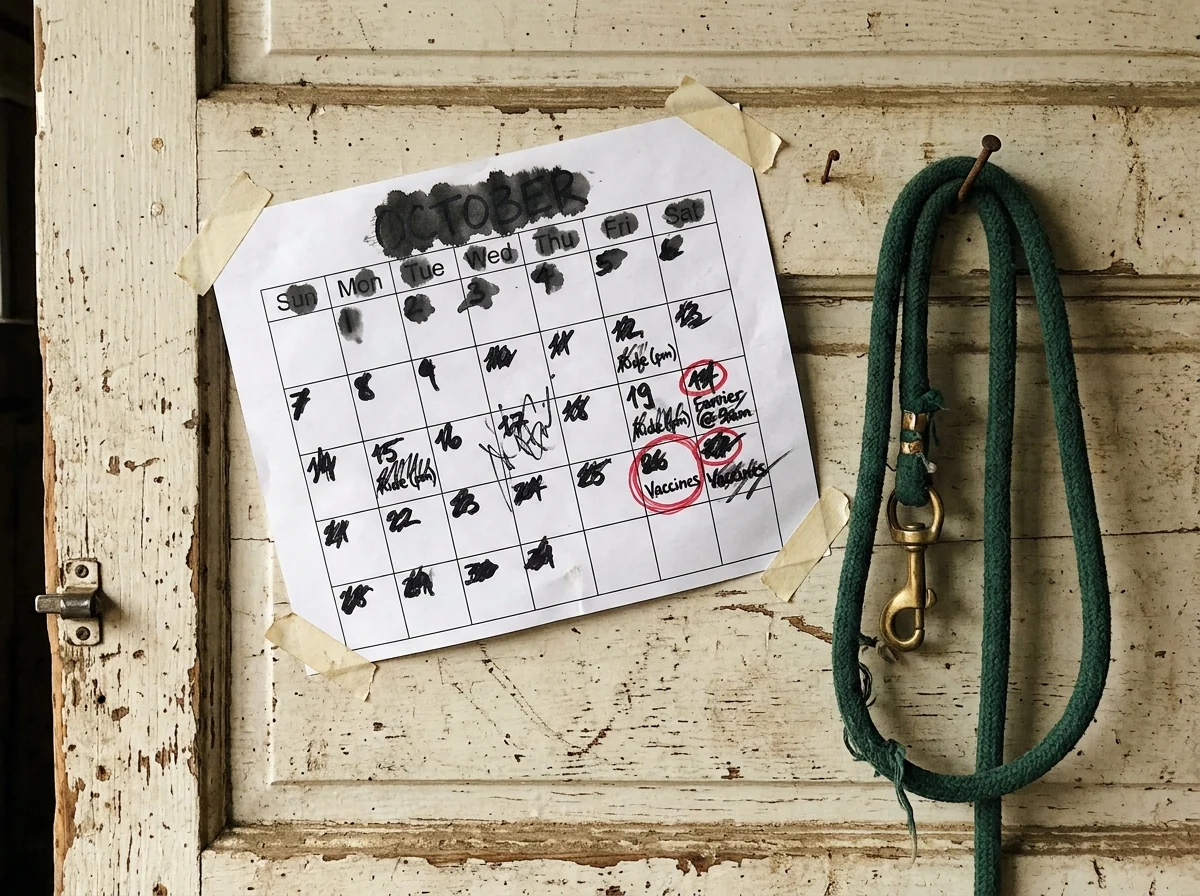
The Hatch Calendar
What to do and when, adjusted for your temperature — because heat drops the cycle
from 28 days to as few as 12 and moves every date on the page.
Value $19
Included
The Second Line
Parasitic wasps, traps, fans and physical barriers. What each one actually does, the
order to add them in, and the two that are a waste of your money.
Value $29
Included
The Proof Sheet
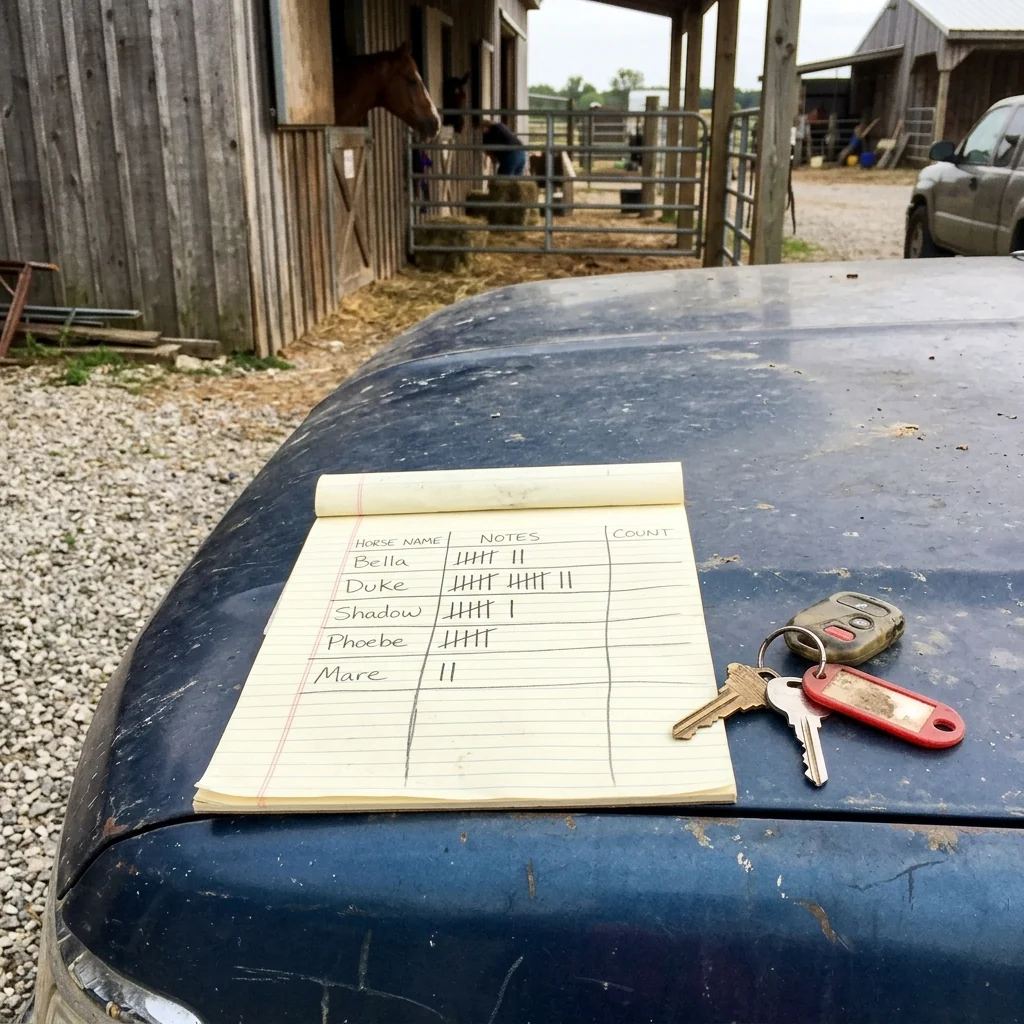
Printable tracking sheets. Ten minutes, once a week, one number. This is also what the
guarantee runs on — so it's the one page you actually have to use.
Value $17
THE DRY LINE SYSTEM
The map + 4 tools · Lifetime access
The Source Map$47
The 14-Day Cover$29
The Hatch Calendar$19
The Second Line$29
The Proof Sheet$17
Total value$141
$27
One time. Instant download. Yours to keep.
Launch pricing — 63 of 200 spots left, then it goes to $47.
60-day money-back guarantee. You keep everything either way.
🛡️
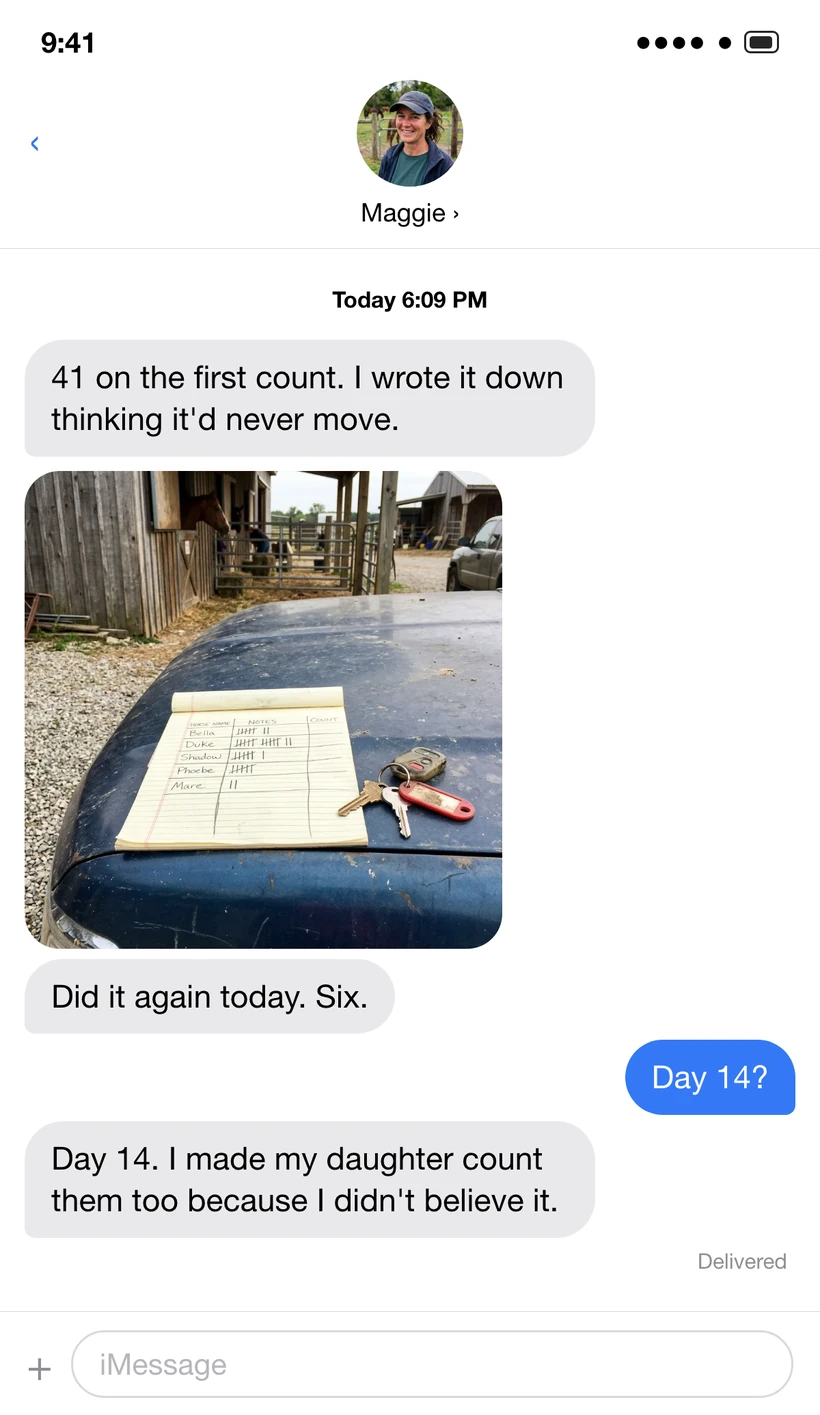
Do the count. If the number doesn't move, you keep it anyway.
Run the ten-minute count before you start, and again on day fourteen. If that number
hasn't come down, write to us and you get your $27 back — and you keep every file.
You have sixty days.
We can say that because the count isn't our opinion. It's yours.
The honest questions, answered.
How do I get it?
By email, the second you pay. PDFs you can print for the tack room or keep on your phone.
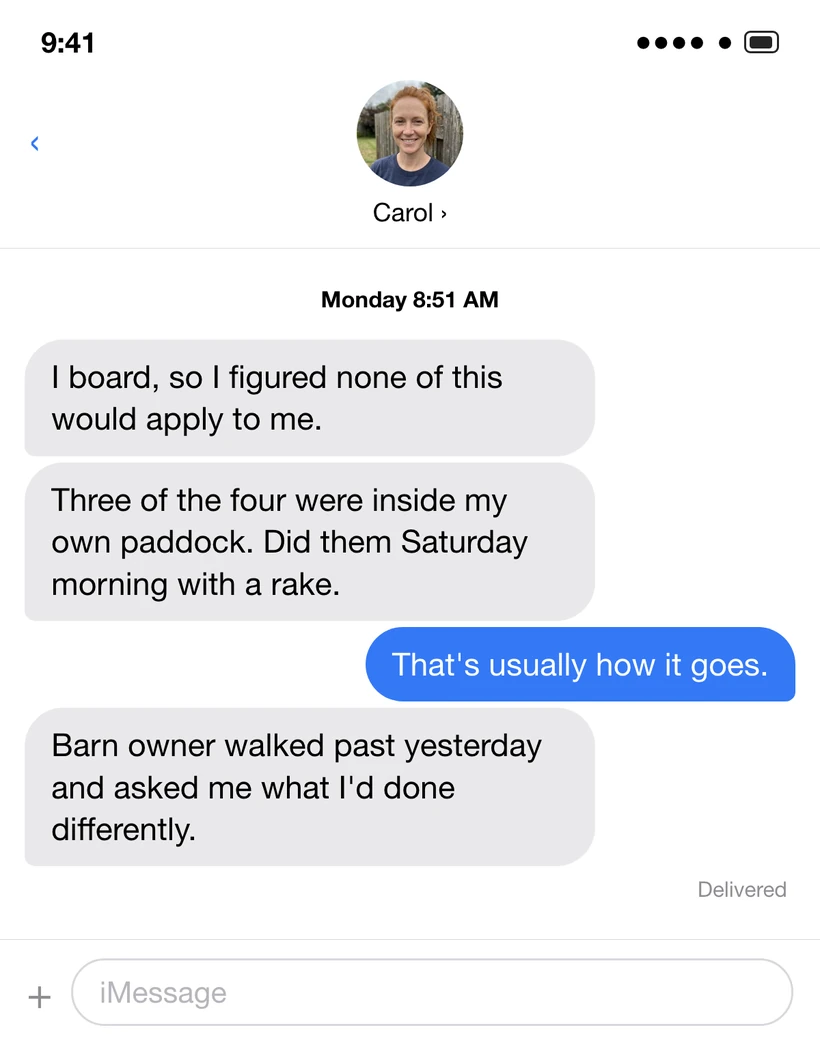
I board. Can I still use this?
Yes. Three of the four spots are inside your own stall and paddock, and the recipe is
yours regardless of whose land it is. There's a page on how to raise the fourth with the
barn owner without it becoming a thing.
Is the recipe safe for my horse?
Every oil is listed with its dilution and a patch test. The table also tells you which
popular oils to keep away from horses — several well-known blends use them.
Do I still need the spray I have?
For the first two weeks, yes. That's exactly what the recipe is for. After that the
whole point is that you stop needing it.
It's nearly the end of the season. Why now?
Because they overwinter as larvae in the same wet material. What you dry in September
decides how many are waiting for you in May.
Is this a subscription?
No. Twenty-seven dollars, once. Nothing renews.
This September, instead of another bottle, dry the four spots.
Ten minutes to find them. Fourteen days to watch the count fall.